Monday, 22 June 2015

April & May Sessions - The Importance of Feedback

During April and May we ran our annual 'Feedback Sessions'. We trialled it last year and it seemed to be very useful for our members so we decided to give it another go. We asked our members to forward some poems or prose which they felt they needed another opinion on. We then distributed these to the rest of the group and allowed a month to read through, reflect, and think of some constructive comments for each piece. Then, when we met up, we gave this feedback in person. We spread this over two months to try and encompass anyone who could only attend either one of the sessions.

We feel that feedback is invaluable to our members in their aims to improve their work. It's always useful to have a second pair of eyes look over your work. It can have many benefits:

- Others may pick up on little mistakes you've overlooked, e.g. spelling/grammar, a misused word, a missing rhyme etc.

- Readers can let you know whether they feel that your work is 'accessible.' That means whether they can understand and follow your work. Some people think that 'good' writing means using lots of long words, but not everyone will understand these. Most people want to write for an audience - they want other people to enjoy their work. If your audience can't understand your work, they won't enjoy it, so it's worth listening to what they have to say!

- Your audience may interpret your work in a different way to how you intended. Because you have written the words with the 'message' of the piece in your head, you can't accurately assess whether it gives an audience enough information to get the point of the piece. e.g. If you have written a murder mystery, you will already know who the killer is while writing. But have you made it too obvious or too obscure who the killer is in the story? Your audience can tell you.  

- Some people who might have more experience in writing might give you feedback to technically improve your work. This could be publishers/mentors/editors etc. They know what kind of work is likely to get published, so if you want to become published, they could have some valuable tips for making your writing flow well. They've got to where they are by learning and taking on feedback, so they're looking to impart their knowledge on you.

As you can see, feedback can be a real chance to learn something about an individual piece of work, or your writing in general. But what if different people give you conflicting feedback? What if you don't agree with their feedback? 

Well, the bottom line is that you are the only one who can make decisions on your work. Feedback is nothing more than suggestions, although some of it can be suggestions backed by experience and good practice. You have to consider every piece of feedback and think "will this benefit my work and take it in the direction I want it to go?" It's up to you to make that assessment. It's your work and your responsibility - you don't have to change anything you don't want to. 

So we know feedback is important, but what if someone asks you to give feedback? Will they think you're being mean about their work? Where do you start?

Well, at Blakenhall Writers we have an understanding and sympathetic method of giving feedback. We make sure our members know that we are not criticising an individual when giving feedback, but merely suggesting how their work could be improved, in our opinion. From there on, as we said above, it's up to the member to decide whether or not to edit their work based on feedback received.

If someone requests that you give them feedback, make sure you have an understanding in place with them that they are willing to receive 'constructive criticism', or even offer some work of your own if you can, for them to review in return. Most of the time if you are approached to give feedback, the person will understand the importance of feedback, but some people will just want to be told how good their work is, so set the ground rules beforehand to make sure you don't ruffle any feathers ;)

You might not have had to think critically about a piece of writing before. It's not just about what could be improved in the piece, but also what works well, and what the writer's strengths are. Don't forget you can read through a piece as many times as it takes to form your opinions on it. Here are some tips to keep in mind when reading through work.

- What is the first think that strikes you about the piece/what is the most memorable part? It might be that one thing doesn't strike you, so give it a read through, and then in ten minutes or so, think back to what you remember about the piece. Was there a stunning image, and fun ending, a surprise?

- What did you enjoy about the piece? Which parts flowed well, and were enjoyable?

- Were there any parts which felt awkward or out of place? Can you figure out why they felt awkward in the piece?

- Can you pick out any writing techniques the author has employed, and do they work well in the piece? e.g. rhymes, alliteration, metaphor. These can add real colour to a piece, but sometimes they aren't effective.

- Did you understand what the piece was about? This is the mark of whether a piece is written effectively or not. 

Hopefully feedback seems a lot less daunting now. It's a really useful tool for writers to learn from and interact with each other, and shouldn't be discounted, regardless of whether you agree with a person's opinions or not. Enjoy sharing your work with others to find out what they think of it. :)  

Thursday, 23 April 2015

March 14th Session - Shakespearean Sonnets

We got together in March for another session dedicated to writing, as we have two feedback sessions coming up in April & May, which will have more focus on discussion of our work than actually creating it.
We looked at an old style of poetry - Shakespearean sonnets. A sonnet is an Italian form of poetry which has a 'song-like' quality. They are usually written about love, but different writers have put their own spin on them over hundreds of years, including Shakespeare, who popularised this type by writing a great many of them! 
There are 3 ‘golden rules’ which govern how Shakespearean sonnets are written.
1.       14 lines long. The sonnets are split into 3 groups of 4 lines (quatrains) and finished off with a couplet (2 lines) to make 14 lines in total. This is the most long-standing rule, and one that modern poets still stick to, even if they put their own spin on some of the other traditions.

2.       Strict rhyme scheme. The rhyme scheme for Shakespearean sonnets is:
a,b,a,b,c,d,c,d,e,f,e,f,g,g
Every time a letter is the same, those lines rhyme, so the 1st/3rd lines rhyme, the 2nd/4th rhyme, the 5th/7th rhyme and so on, until the last two which rhyme with each other.
3.       Iambic pentameter. “What?!” This is the meter of the poem, which means the beats per line and stresses of the words. There are typically 10 syllables per line, with the accent on every other beat. This line from one of Shakespeare’s sonnets is a good example:
So now I have confessed that he is thine
This gave us really good practice writing in form. Many of us are used to writing poetry in free verse, and some of us don’t really dabble in poetry, so it was a challenge to learn about the strict rules involved in writing Shakespearean sonnets. We feel it is beneficial within the group to learn about traditional forms and styles of poetry for two reasons – it pushes your boundaries as a writer when you learn new techniques, and it demonstrates an understanding of where your art has come from and how it developed. Both of these can open new doors in terms of both inspiration and bringing variety to your portfolio.
There are other types of sonnet too – Petrarchan, for example, which has a different rhyme scheme. Many modern poets play around with the structure and just write a 14-line poem influenced by traditional sonnets. However, they wouldn’t be able to do this unless they had spent some time learning about sonnets.
Why not look up some traditional and modern sonnets and see what they’re like? Then you could try writing one using these golden rules, and then with your own spin.
A great place to start is the Cannon Poets website, as they run a yearly competition – ‘Sonnet or Not’ – which accepts entries of any 14-line poem. You can read past winners here.
Here’s another website collating a really good selection of traditional and modern sonnets. Take a look!

Sunday, 22 February 2015

Offa's Press Winter Workshop

On 31st January, two of our members, Cherry and Kuli, attended a workshop run by local publisher Offa’s Press. We headed off to Pant, a village near Oswestry in Shropshire, in time to start the workshop at 10:30. Luckily, although we’d had some snow and ice in the few days beforehand, the morning shaped up to be mild and sunny.
We started the day with a workshop in Pant village hall, where we discussed poetry on the theme of winter by Western poets. The favourite of the day was Snow Joke by Simon Armitage, which is a ‘gossip’-style poem about a man who ignores police warnings and drives across the Yorkshire moors in the snow, only to become trapped in his car in a snow drift.
They all certainly gave us something to think about when examining how to represent the season in words.  For a completely different flavour, we moved on to the next part of the workshop where we looked at tanka, a traditional Japanese form.
Tanka are 5 lines long, have a juxtaposition of images (usually one from the poet’s surroundings and one about the poet themselves), and use a ‘pivot line’ between the first two and last two lines, which means the poem could be reversed and still make sense.  
We practiced writing tanka about winter to get us accustomed to the form. We had to draw on our experiences of winter, either recently or winters past we could remember.
We broke briefly for lunch to get our strength up for the walk. We went a similar route to last time we were there – through the limestone quarry over Llanymymech Rocks – all the while taking in the winter surroundings. There was plenty to be inspired by, from the gorgeous view at the top, to the snowdrops just coming through.


Although we had to leave at 2pm, the day continued with a further workshop in the afternoon, to work on poems inspired by the walk.
Once again, Offa’s Press delivered a first class personal learning experience, and both our members are keen to go back for the next poetry day, to be arranged for later in the year. You can see our girls’ work on the Offa’s Press website here, alongside other poems from the day.
 
Our girls on the walk around Llanymynech Rocks


Friday, 20 February 2015

Wild Bytes Café and the Black Country Writers Project

Recently, we learned that local community group Our Own Future have launched a project to promote local writers and give them a platform to share their work with a wider audience. Black Country Writers Project is accepting submissions of poetry and prose to display in Wild Bytes Café in Darlington St, Wolverhampton, for customers to enjoy while relaxing at the café.  
Three of our members - Roma, Kuli and Cherry – submitted some work which was accepted to be displayed at the café. Subsequently, they were invited to perform their work at the launch event for the project, which was held on the same day as the official launch of Wild Bytes Café.
On 14th Feb, after the Blakenhall Writers session, they went along to share work on the theme of ‘love’ – very appropriate for the date! They read their work alongside two esteemed local poets - Jane Seabourne and Emma Purshouse - who had also submitted work to the project. Some of the audience had brought their work along too and joined in with the reading, while our member Amarjit came along to support. 
The café was busy and bustling, and the audience were enthusiastic about the work which was shared. It was a lovely environment and all three of our members enjoyed sharing their work and seeing their work on display.  

The project is ongoing, so if you have some work you want to share to help take your writing to the next level, why not check out their requirements and submit to ourownfuture@gmail.com?

You can read more about the launch event on Our Own Future's blog, where you can see our members performing.

February 14th Session - getting ready for our anthology!

Nobody can escape it – the year of the Blakenhall Writers Anthology is here! We want to take every opportunity to give our members the chance to create some really compelling content ready to submit to the anthology, so we are tailoring our sessions to the theme of our identity, and our local community.
For February’s session, we decided to respond to the group’s request for further work on character development and dialogue. We gave it a local twist by using some old photos of residents of Wolverhampton from the past. There were schoolchildren, factory workers, and even the head of the workhouse, who were just waiting for us to give them a Blakenhall makeover.
First, we did a bit of work to turn these pictures into characters.  We tried to answer some questions about the characters, including ‘what do they like to do on a Saturday?’ ‘Describe the most important person in their life’ and ‘What is it like where they live?’
This exercise meant we could really get inside the character’s head, as well as giving us some good ammunition for writing a short story. But now we had some ideas brewing, we had to give our characters a voice.
We learned that dialogue has a purpose in a story; to show the relationship between characters, to move the story on, or to build tension. It’s important that this is effective, or your work will not be believable.
We explored some dialogue techniques, including the importance of the word ‘said.’ Did you know, that if you try to use lots of different words to describe how your character is feeling, you lose the impact of the words? Using ‘said’ is a sure-fire way to maintain a neutral playing field and let the words themselves do the talking (so to speak!)
Then we tied it all together by writing a scene for a story in which the character we built in the first exercise was speaking to another character, to practice the techniques we’d just discussed. You can find some good tips here.
I hope this has given everyone a starting point for a story they might like to submit for our anthology! Try to work on your piece for next month’s meeting and bring it along for some feedback.
Don’t forget, you need to submit some work for our feedback session to the Blakenhall Writers email address by the date of our next meeting (March 14th). Please send up to 3 poems or up to 400 words of prose that you would like some constructive comments on. We will distribute them to the whole group to review, and bring our comments in to the April session.

Monday, 12 January 2015

January 10th Session & January Writing Task - with the fabulous Roz Goddard and Poetry on Loan!

Well we truly started 2015 with a bang! We had the pleasure of welcoming former Birmingham Laureate Roz Goddard to our group to lead us in exercises on writing poetry from prompts.

We were lucky enough to welcome some new faces, as well as familiar faces from other writing groups, and our group friend Jane Seabourne - who had masterminded the session in conjunction with Poetry on Loan -  joined us too.

Roz started with a little game to introduce everyone in the room. She had laid out a variety of objects on the table, including playing cards, a mobile phone, a necklace, a shaving brush and various other items. We each had to choose an object which we connected with in some way and describe our connection with it, so we learned a little something about everyone around the table.

We first of all loosened up our writing minds with a bit of freewriting – or, ‘hotpenning’ – where the writer does a stream of consciousness exercise without considering grammar or other editing. Roz gave us the starting phrase: ‘It always happens. I can feel my heart racing…’ and we continued writing non-stop for 5 minutes.

Once we were nice and limber, Roz asked us to do a visualisation exercise. We chose an object - either from the table or another one we had thought of that we wanted to write about – and we all closed our eyes as Roz talked us through a surreal scenario where we buried the object in the ground! She promised we would pick this up again later in the session but we moved on to another exercise.

Roz had brought with her a selection of postcards which she distributed around the table for us to look at. We picked ones we were drawn to, and then answered a series of questions about the pictures, such as ‘What time of day is it in the picture?’ and ‘What is happening out of shot?’. As we brought all of these answers together, a poem started to form! We had a bit of time to work on them and read them aloud to the group. There were lots of great interpretations of the prompts, and lots of potential for some strong poems.

Then we returned to our buried items from earlier in the day. We did another visualisation where Roz talked us through returning to the place where we had buried our items a year on, to find that a tree had grown from our items! We had to imagine what a tree which had sprouted from an inanimate object would look like, and write about it. This exercise we took away with us to finish over the month and share it at February’s meeting.

These exercises really helped us to understand how we, as writers, can be inspired from everyday objects, and gave us a great kick-start to the year’s activities. It was lovely to meet Roz, who was an excellent teacher, and to reinvigorate our creative juices with some new writing exercises. Many thanks to Roz, Jane Seabourne and Poetry on Loan for enabling Blakenhall Writers to host such a useful session.

January Writing Task

If you want to join in the task this month, imagine a tree which has grown from an inanimate object, and share your thoughts with us in February! You can pick any object you like.

Sunday, 4 January 2015

December 13th Session & December Writing Task

December marked our last session of the year, when we traditionally have a ‘reading session’, and discuss a book we’ve read that year. We brought in some food and had a great time talking about our reading lists. Here are the books the group brought in and our thoughts on them:

Cherry - Lolita by Vladimir Nabokov
 

An ageing writer becomes obsessed with his 12-year-old stepdaughter, who he calls Lolita. This controversial book is beautifully written, although the language can be quite complex at points. It has an unreliable narrator and plot twists.

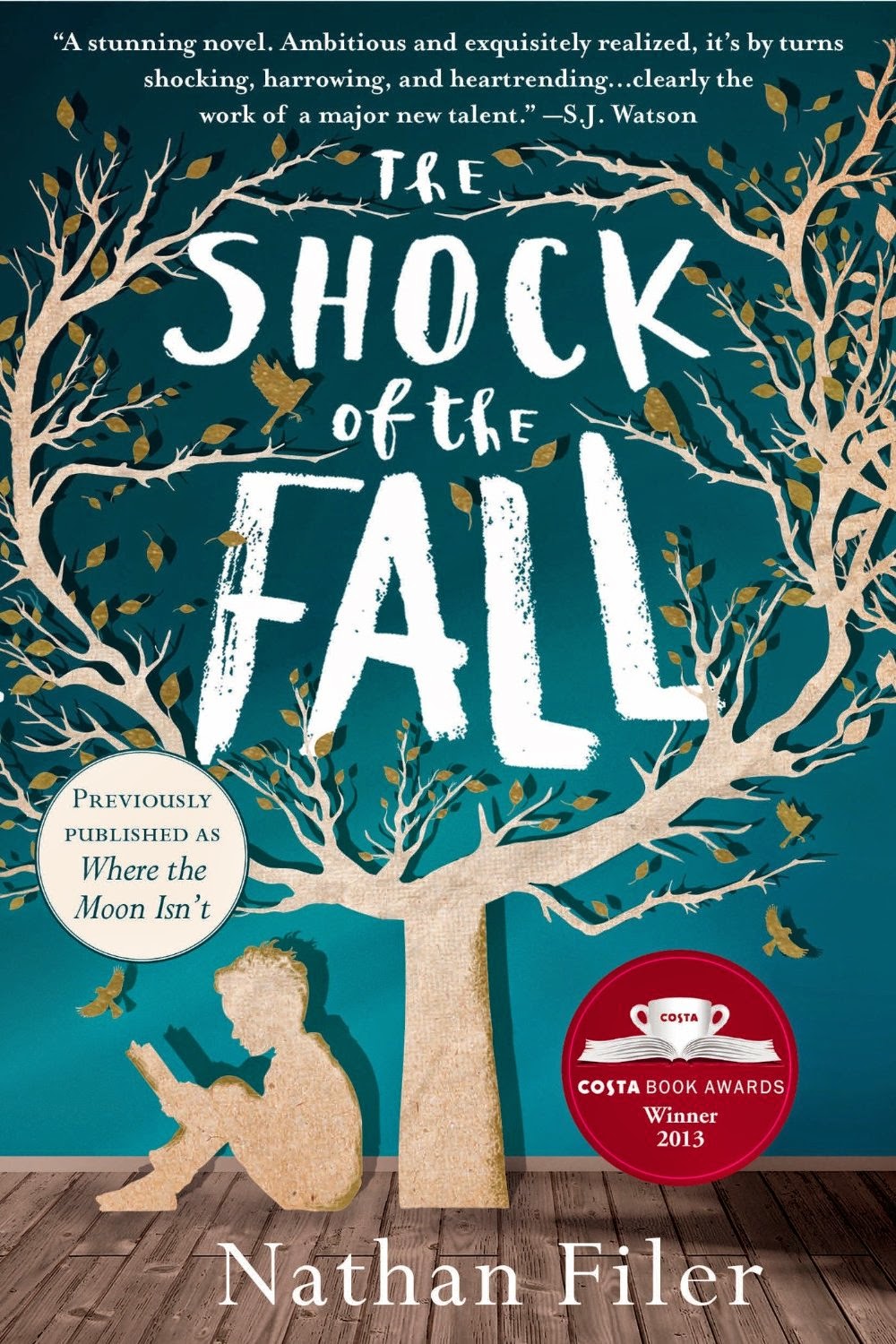
Roma - The Shock of The Fall by Nathan Filer 


A teenager called Matthew suffers from a mental illness following the loss of his brother. This award-winning novel was well-researched and the narration demonstrates Matthew’s skewed vision of the world.

Richard - The Sense of an Ending by Julian Barnes


A man charts his life and relationships and reflects on the effects of a suicide. This Man Booker Prize-winning novel makes you want to read the story over again. It is written well and even people who don’t usually read will enjoy it.  

Kuli - The Happy Prince by Oscar Wilde


This story introduces children to important life lessons using the selfless actions of a swallow and a statue he meets on his travels. It is a poignant and emotional story which can be enjoyed by all ages.

Nirmal - Harry Potter and the Chamber of Secrets by J.K Rowling/ Luis Suarez biography  


The schoolboy wizard continues his adventures in the second instalment of the series, battling a giant serpent in the chamber of secrets. / An insight into Suarez’s most notorious moment on the field, and the events in his life which led up to it. A thought-provoking biography which elicits empathy.

Anne - When God was a Rabbit by Sarah Winman


The story of a young woman growing up, and the relationships she forms along the way, particularly with her brother and best friend. Award-winning and well recommended, the storyline is more ‘woven’ than linear, which adds a nice complexity to the story.

Des – Twilight series by Stephenie Meyer


Teen vampire romance novels, detailing the burgeoning relationship between a human girl and her undead lover. Recommended for lovers of romance and horror, these books are easy reading.                                                    

Michael - The Adventures of Sherlock Holmes by Sir Arthur Conan Doyle 


These well-known thrillers featuring England’s most famous detective are well-written and exciting. They created many of the standards for modern detective stories and there are many interesting tales behind the writing. They have been adapted and modernised many times, but the original stories stand the test of time despite their age.  

It was very interesting to see what people had been reading during the year, and we have a lot of new recommendations for our reading lists.

December Writing Task

We did a small exercise to take away and use for our writing task. We took a piece of paper and wrote down a potential novel title. Then we swapped pieces of paper so nobody ended up with their own. The idea is to use the novel title to inspire a poem/short piece of writing. When we reconvene, we will compare the original idea behind the title and the interpretation by the recipient.

Don’t forget that next month we will be joined by Poetry on Loan’s Roz Goddard, who will be leading our session for us on poetry! Look forward to seeing you all there!